
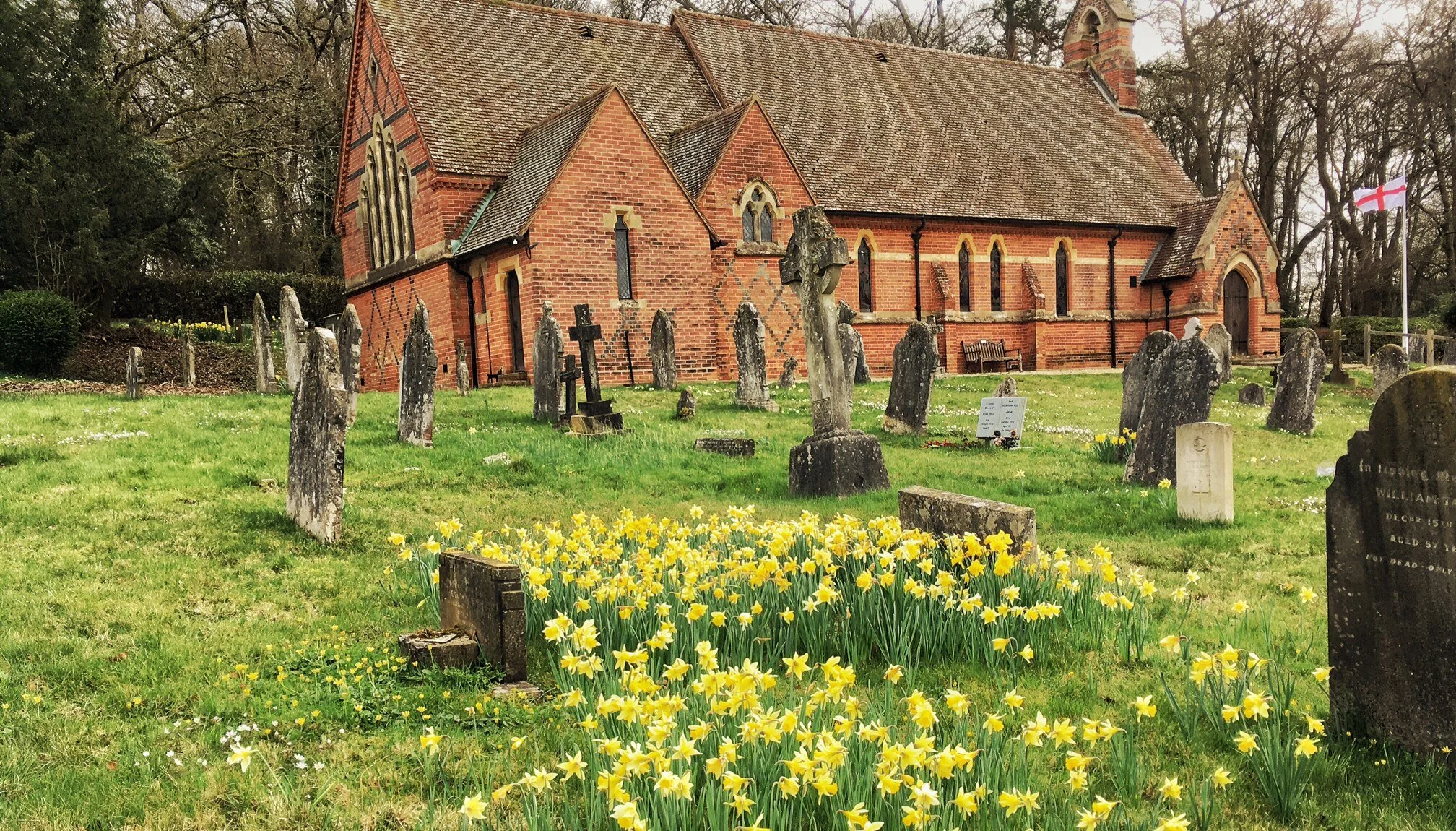
A Brief History of Christ Church, Emery Down
The building of the church, the school and the almshouses (Boultbee Cottages) as well as the establishment of the Parish of Emery Down was due entirely to the generosity and foresight of Admiral Frederick Moore Boultbee (1798-1876) who visited Emery Down in the mid-19th century and bought a house here. His home – where he lived with his niece Charlotte – became the vicarage after her death.
Completed in early 1864 and consecrated for worship later that year, Christ Church’s designing architect was William Butterfield FSA (1814-1900). Butterfield was the first Victorian architect to experiment with constructional colour and pioneered the High Victorian phase of the Gothic Revival. He shows his considerable talents here in the way he could undertake much smaller and more intimate projects.
Christ Church is built of red New Forest brick with blue diapers ingeniously detailed in a polychromatic design and Bath stone. The choir stalls contain kneeling boards unique to Butterfield’s specification. Seating about 100 people, the church has a delightfully domestic atmosphere and fits perfectly into its village environment.
Click for further information on Art and The Churchyard.
Leaflets giving more details of the history of Christ Church are available to pick up when visiting the church.