
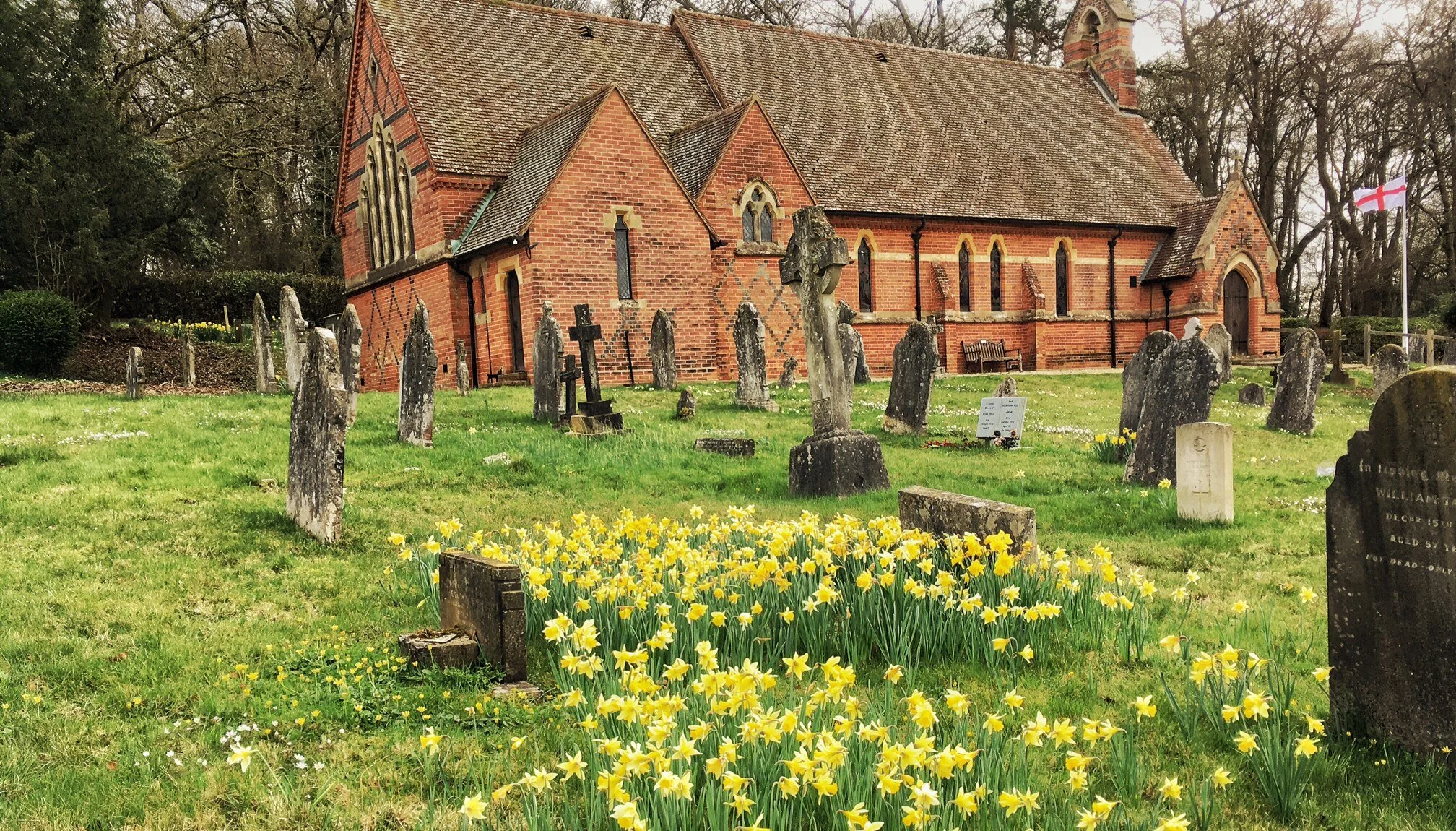
Wildflower meadow
Some years ago, we took the decision to not to mow the grass in spring and summer in the older areas of the churchyard where families do not visit often. We mow these areas in the autumn. Our reward is a succession of wildflowers from early spring through to summer when over 300 wild orchids grow. Insects, butterflies and birds thrive too. Our churchyard has become a haven of peace and beauty, much enjoyed by visitors and wildlife.
On Mothering Sunday and from early summer onwards please pick up one of the ‘Welcome to our Churchyard’ prayer cards, available in the church.
Read on for more on reptiles!
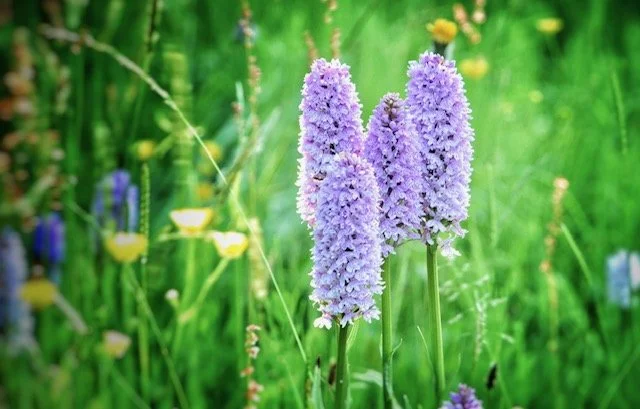
Orchids thriving in our churchyard.
Slow-worms in Churchyards Project (SLiC)
Wildlife habitats in churchyards provide a thriving ecosystem for many different species, including reptiles. Slow-worms (Anguis Fragilis) are the most common reptile found. We are pleased that our churchyard is taking part in a survey of this protected species. Volunteers from the Dorset Amphibian and Reptile Network, aim to visit the churchyard every month to check if there are any reptiles underneath the carpet tiles which they have placed near the hedges and in long grassy areas. They look to see whether any other reptiles are out foraging or basking in the sun. The tiles provide protection from predators and a place for the reptiles to warm up either under the tiles or on top. Reptiles are cold blooded and they need warmth to become active. We try not to disturb the tiles otherwise the reptiles may not use them again.
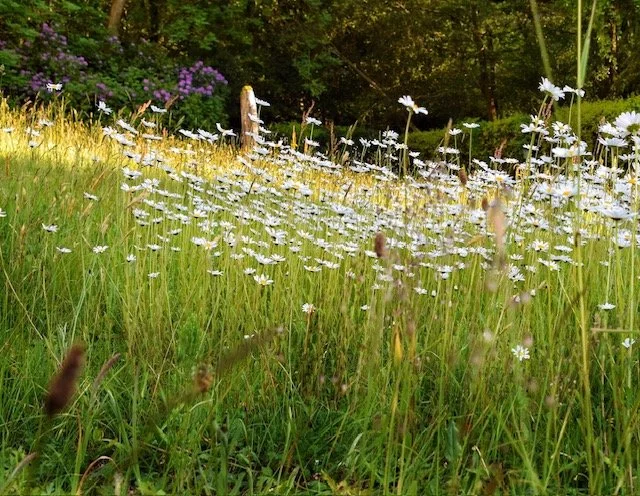
Making it clear
Archaeovision took part in the first day of the survey for its Rediscovering and Conserving Our Archaeological Heritage project. Amongst its many aims was discovering forest heritage and developing community archaeology. A first stage in the programme was heritage recording in Emery Down churchyard.
Click here for the Archaeovision’s ‘Emery Down Reflectance Transformation Imaging (RTI)’ report.

Volunteers surveying the churchyard.
Churchyard Memorial Survey
In 2018 the New Forest National Park Authority ran a landscape scheme, Our Past, Our Future (supported by Heritage Lottery funding), and worked with parishioners to survey the condition of, and record the monuments in Emery Down graveyard. The survey helped map and identify monuments for conservation. The database created will assist the ongoing management of the graveyard and be useful for genealogical research and we plan to provide a link to it in the future.
Click here for more details of the memorial survey.

Headstones before and after Reflectance Transformation Imaging (RTI).
The Lychgate
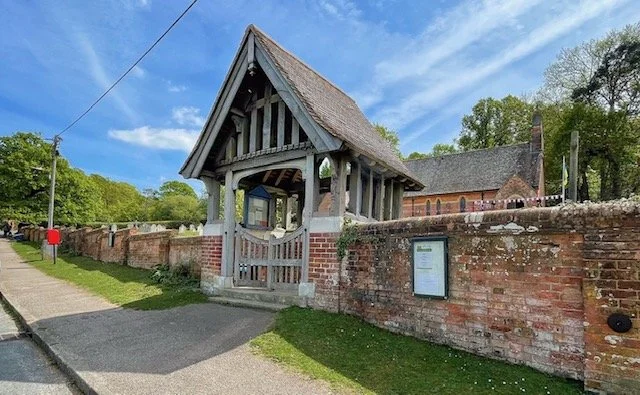
We have researched the lives of the 26 men whose names are inscribed in the lychgate and those commemorated on headstones in the churchyard. Please click here to view a Powerpoint presentation giving brief details of each man. We hope to inscribe on the lychgate the names of the four soldiers who were killed in WW2 when a bomb hit Allum Green House.
The men lying in the Commonwealth War Graves are Frederick Thomas Sheardown, James Albert Witt, Charles Frederick Richards and Frederick Ernest William Veal. The graves of Privates Sheardown and Witt are in front of the church and those of Sergeants Richards and Veal are behind the church.
When you visit the church please pick up leaflet giving details of the lychgate and of the men in the Commonwealth War Graves.